
Layers, Not Prayers: How to Stay Warm on the Mountain
Layer smart. Ride longer. Enjoy the cold (because… snow)

Alright, let’s talk about staying warm out there.
Not “I wore four hoodies and now I’m sweating through my soul” warm. I mean the kind of warm where you can actually focus on your turns, not your fingers… and you’re still comfortable when the sun dips and the temps follow it.
Also: cold isn’t the enemy. Cold is the reason we get the good stuff. You can’t have great snow without winter doing winter things. So this is less “how to fight the cold,” and more “how to dress like you’ve done this before.”
The Only Layering System You Need (and it actually works)
1) Base layer = stay dry
Your base layer has one job: pull moisture off your skin so you don’t get chilled later.
- Best: merino wool or synthetic performance fabric
- Hard pass: cotton (cotton is comfy… until it becomes a cold, wet apology)
2) Mid layer = trap heat
This is your “warmth dial.” You adjust it depending on the day.
- Options: fleece, grid fleece, light puffy, wool
- Mountain Mike rule: two thin mid layers beat one bulky one most of the time.
3) Outer layer = block wind + snow
This is your armor. It keeps the wind from stealing your body heat and the snow from soaking your insulation.
- You can go shell (and build warmth underneath) or insulated jacket (easy mode)
- Bonus points for: good cuffs, good hood, vents
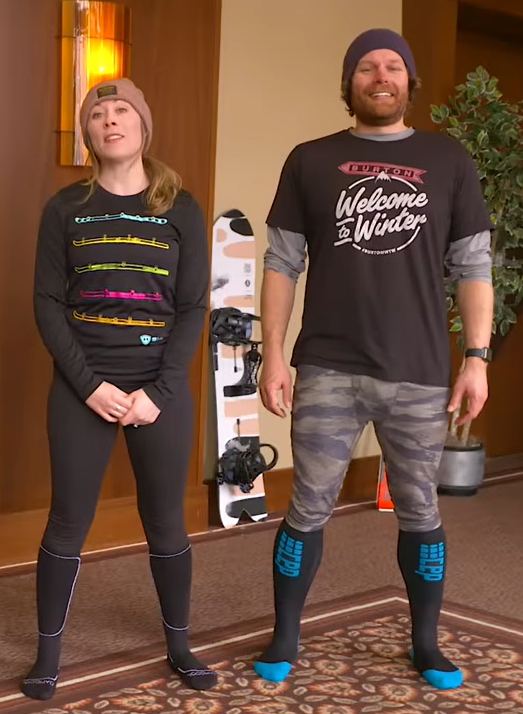
My Best Layer Combos By Temperature
These are starting points, not commandments. Wind, sun, humidity, and how hard you ride all matter.
Mike’s cheat code: If it’s windy, dress like it’s 10°F colder.
30–40°F (mild day / “I might regret this” weather)
This is where people overheat and then wonder why they’re freezing later.
- Base: lightweight merino/synthetic top + bottom
- Mid: thin fleece or none if you run hot
- Outer: shell jacket + shell pants (or lightly insulated pants)
- Move: use vents early. If you start a little cool, you’ll be perfect after a couple runs.
20–30°F (the sweet spot)
If you dress right, you forget it’s winter… in the best way!
- Base: midweight merino/synthetic
- Mid: grid fleece or standard fleece
- Outer: shell or insulated jacket; insulated pants or shells + thin fleece bottoms
- Add-ons: good gloves + gaiter, and you’re set.
10–20°F (cold, but totally manageable)
This is “dress like an adult” territory.
- Base: midweight (top + bottom)
- Mid: fleece; add a light puffy if you take breaks or ride lifts a lot
- Outer: windproof shell or insulated jacket
- Pay attention to: hands + feet (this is where they start complaining)
0–10°F (serious winter, still a great day)
If you build your kit on purpose, this can be prime conditions.
- Base: midweight (heavyweight if you run cold)
- Mid: fleece + light puffy (or thicker fleece)
- Outer: windproof shell with a reliable hood
- Must-haves: mittens or warmer gloves, better face coverage, proper socks
Below 0°F (the “legend day” setup)
This is where the mountain feels extra crisp and your gear choices matter.
- Base: midweight/heavyweight (still no cotton, ever)
- Mid: fleece + real insulation (puffy time)
- Outer: windproof shell + tight cuffs + good collar/hood seal
- Non-negotiables: mittens, face coverage, warm socks, and a plan for breaks
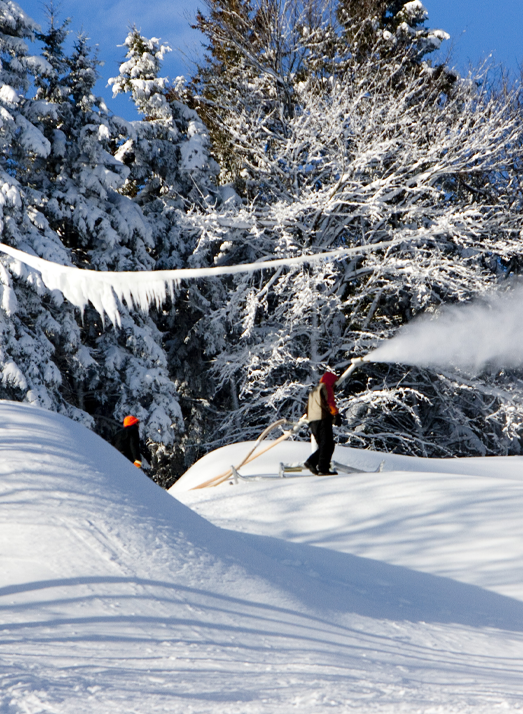
The Layering Rules That Save Your Day
Rule 1: Dress for the second run, not the parking lot
If you’re perfectly warm standing still, you’re going to sweat once you start moving.
Rule 2: Sweat is the quiet villain
You sweat, you get damp. You get damp, you get cold later. Use vents. Unzip on the lift. Don’t roast your core.
Rule 3: Seal the gaps
Most heat loss is from “leaks,” not lack of layers:
- wrists (cuffs + glove gauntlets)
- neck (gaiter + zipper seal)
- waist (long base layer + bibs or snow skirt)
- ankles (proper socks + good boot fit)
Rule 4: Your boots aren’t a storage unit
Too-thick socks can cut circulation. Cold feet usually come from moisture or poor blood flow, not “not enough sock.”
Rule 5: Carry one insurance layer
A packable puffy or extra fleece is a lifesaver. Especially if you’ve got kids, lesson breaks, or lots of lift time.
Accessories That Actually Move The Needle
Hands: mittens win cold days
- Mittens are warmer than gloves (shared heat = happier fingers)
- Best combo for cold: mittens + liner gloves
- Hand warmer tip: place it on the back of your hand, not your palm, so you can still grip comfortably
Feet: one good sock, not two questionable ones
- Go wool or synthetic ski socks
- One pair only. Two pairs often = tighter boots = colder toes
- Dry spare socks in the car is an elite move
Head & face: warm without the fog
- Helmet + thin liner usually works
- Add a gaiter (light or thick depending on the day)
- Really cold/windy? Balaclava under helmet
- If goggles fog: your face covering might be venting breath upward. Adjust it lower or switch styles.
Legs & core: the underrated upgrades
- Bibs help a ton in wind and on long chairlift rides
- A thin fleece layer under shell pants is the difference between “fine” and “why am I miserable”
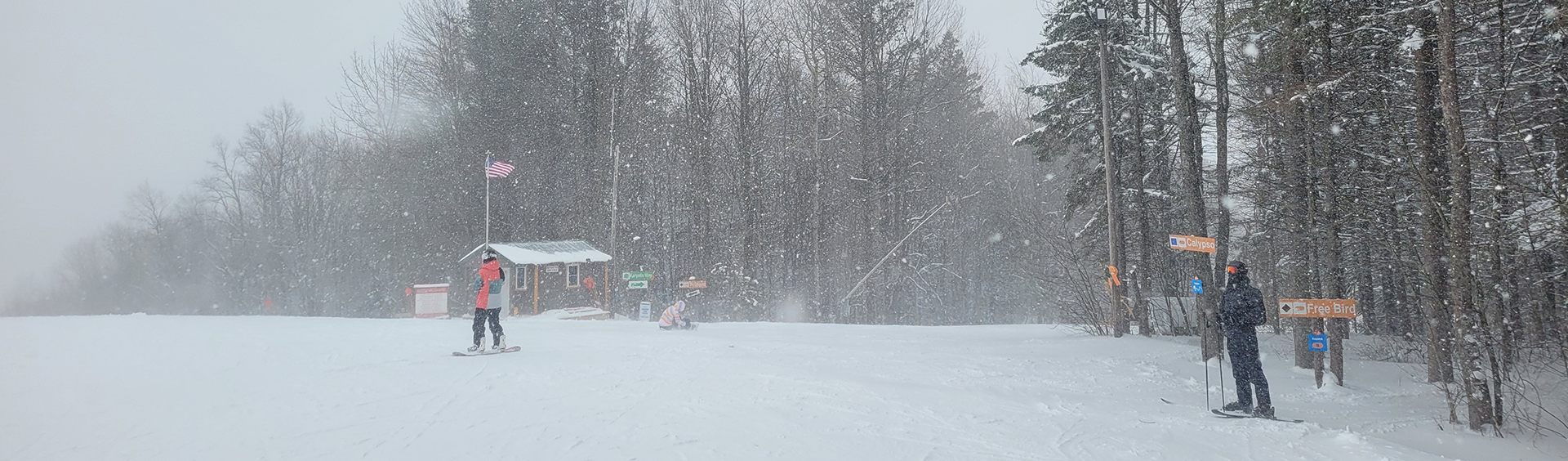
Quick Troubleshooting
“I’m warm at first, then freezing later.”
You’re probably sweating early. Start cooler, vent sooner, upgrade your base layer.
“My hands are cold no matter what.”
Try mittens + liners. Don’t clamp down on poles. And make sure your jacket cuffs aren’t cutting circulation.
“My toes go numb.”
Boot fit and circulation first. Sock thickness second. Also: don’t crank your lower buckles like you’re sealing a submarine hatch.
“My neck/face is always cold.”
Better face coverage + a better seal at the zipper. Wind sneaks in there and laughs.
One Fun Thing About Extreme Cold (because we need it)
When it’s truly cold, the mountain gets that crisp winter feel. Snow can be drier, edges bite better, and everything looks like it belongs on a postcard. It’s the kind of day where you feel like you earned it… and the hot chocolate (or lodge snack) hits like a reward.
Cold days are good snow days if you dress right.
Final Thoughts
Staying warm out here isn’t about piling on everything you own. It’s about staying dry, keeping your warmth where it counts, and adjusting before you’re already uncomfortable. Start a little cool, vent early, seal the gaps, and let your accessories do the heavy lifting when winter turns the dial down. Do that, and the cold stops being “that thing you tolerate” and becomes part of what makes a snow day feel like a snow day.
And hey, don’t be mad at the cold. We need it. Without cold weather, we’d just be… downhill hiking with expensive shoes.
Why don’t the mountains at Greek peak ever get cold? Because they have snow caps! 😉
About the author:
Mountain Mike is your go-to guide for adventure at Greek Peak Mountain Resort. A seasoned outdoor enthusiast and a master of memorable puns, Mike brings his passion for the outdoors and his knack for storytelling to every article. Join him as he explores the peaks and valleys of adventure, inspiring readers to make every outdoor moment unforgettable.